For this next step, I would like you to get acquainted with your space. Spend a day outside; bring a notepad, maybe a camera, and definitely a few snacks 😉
This is the step that will narrow down that list of plant species the most, as it will identify the limitations of your space.
Here is what I want you to take note of:
- The most intuitive one is space. How much free space do you have that you can dedicate to your garden? Be creative- don’t limit yourself just by square footage, make note of walls, railings, window ledges, and overhanging roofs, where gardens can be grown vertically, or planters can be hung.
- Next, track the sunlight throughout the day. Does the amount of sunlight fluctuate throughout your space? It might help to make a small sketch of places that are shaded, full-sun, or partially-shaded throughout the day. Cross off plants you can’t grow based off these observations!
- This last part should be done on a rainy-day, or after a rainfall. Do parts of your balcony remain dry? is everywhere equally wetted? Are there spots where water pools? Dry spots are great for plants that are sensitive about their moisture content, and whos’ water saturation needs to be monitored more closely, whereas places that get a lot of rain could benefit plants that love water, or even be a great place for a water barrel! As for pooling, this is important to note if you plan on using fabric planters, as pooling will mean they are sitting in water, but it is also important to note as pools can serve as a source of water for wildlife!
“Paying attention is a form of reciprocity with the living world, receiving the gifts with open eyes and open heart.”
Robin Wall Kimmerer, Braiding Sweetgrass:
This chart can be used as a guide for sunlight levels
| Level | Amount of Sunlight |
| Full Sun | 6 hours or more |
| Partial Sun / Shade | 3-6 hours |
| Full Shade | Less than 3 hours |
Here is what I did for my own space:
Before we start, I would like to note two things.
First, while this may appear large for a balcony, as per my lease, I am restricted to planters on the wooden balcony areas only, as well as bordering the perimeter of the balcony.
Second, while I may be blessed with space, I am not so much blessed with sunlight.
Area #1: Sun/Partial-Shade
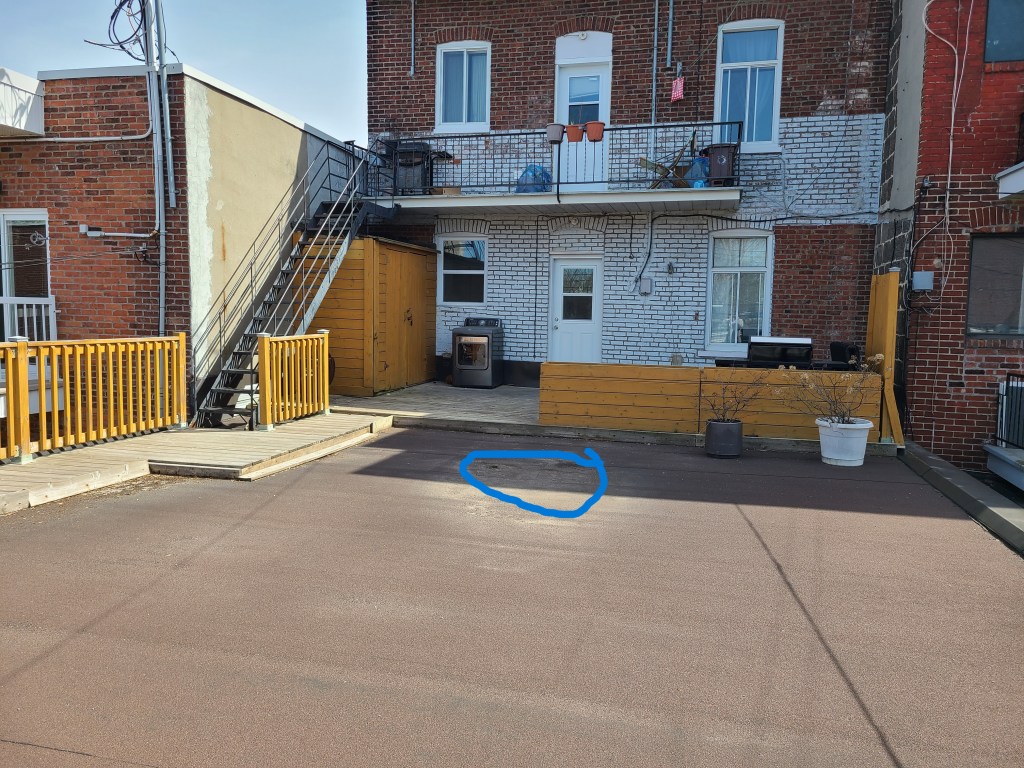
- The area where you see shade has full sunlight all morning and most of the afternoon, but lots of shade in the late afternoon. I’ve labelled this area for full-sun/partial shade plants.
- The area circled in blue has a lot of water pooling, so this area will be left alone as a source of water for wildlife.

Area #2: Full Sun
- Planters can be placed on the area colored in red
- This area gets sunlight from sunrise to sunset.
- Full exposure to rainfall.
Area #3: Partial-Shade
- I would love to utilize this space under the stairs that has mostly gone unused in the past.
- Receives ~3 hours of direct sun in the early afternoon as the sun is rising, and lots of indirect light throughout the day.
- For the majority of the day, as we can see here, there are sun spots where the sun peaks through, like the sunspots peaking through a tree canopy onto the forest floor, but it is otherwise shaded.

Area #4: Full Shade
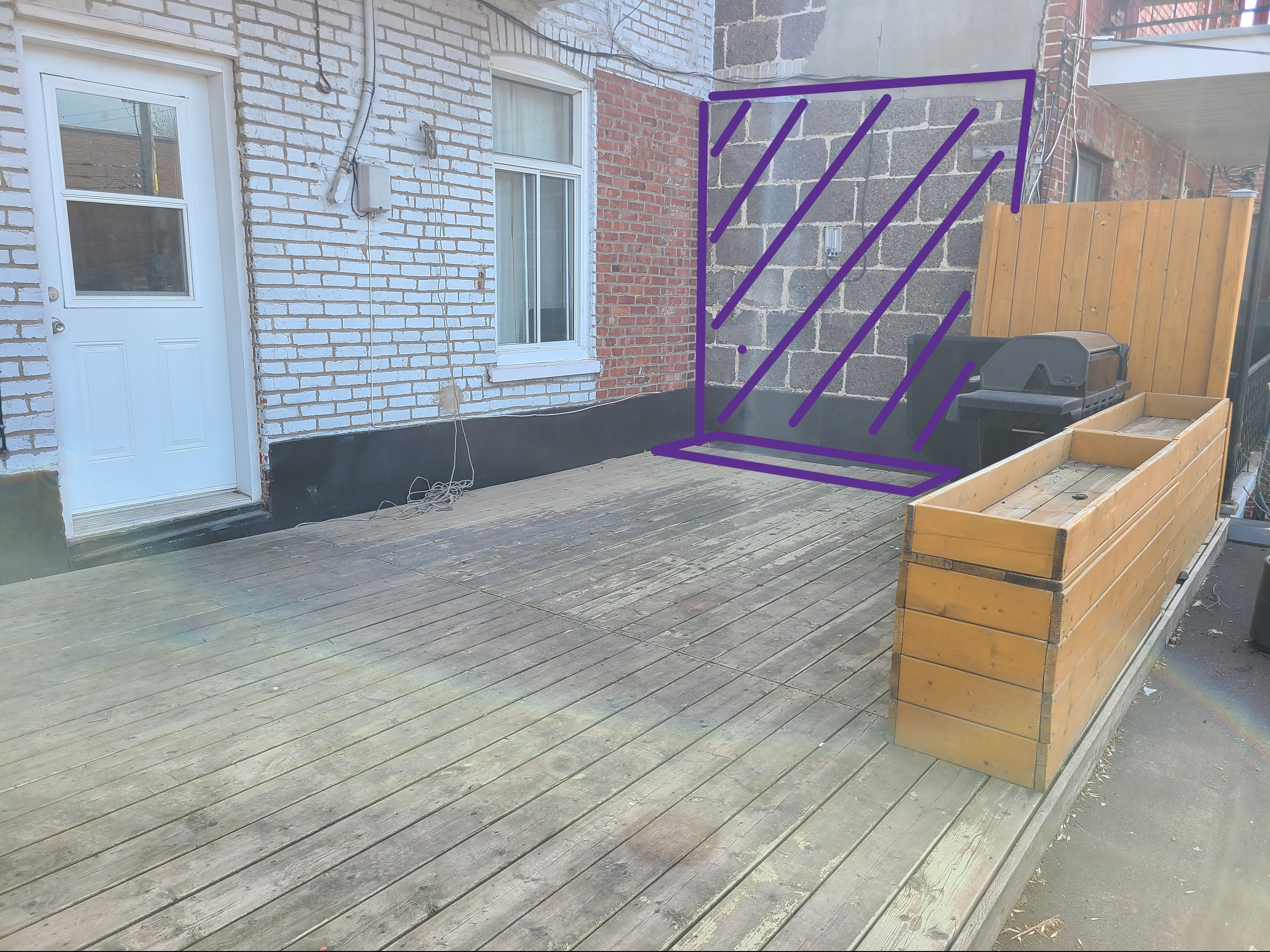
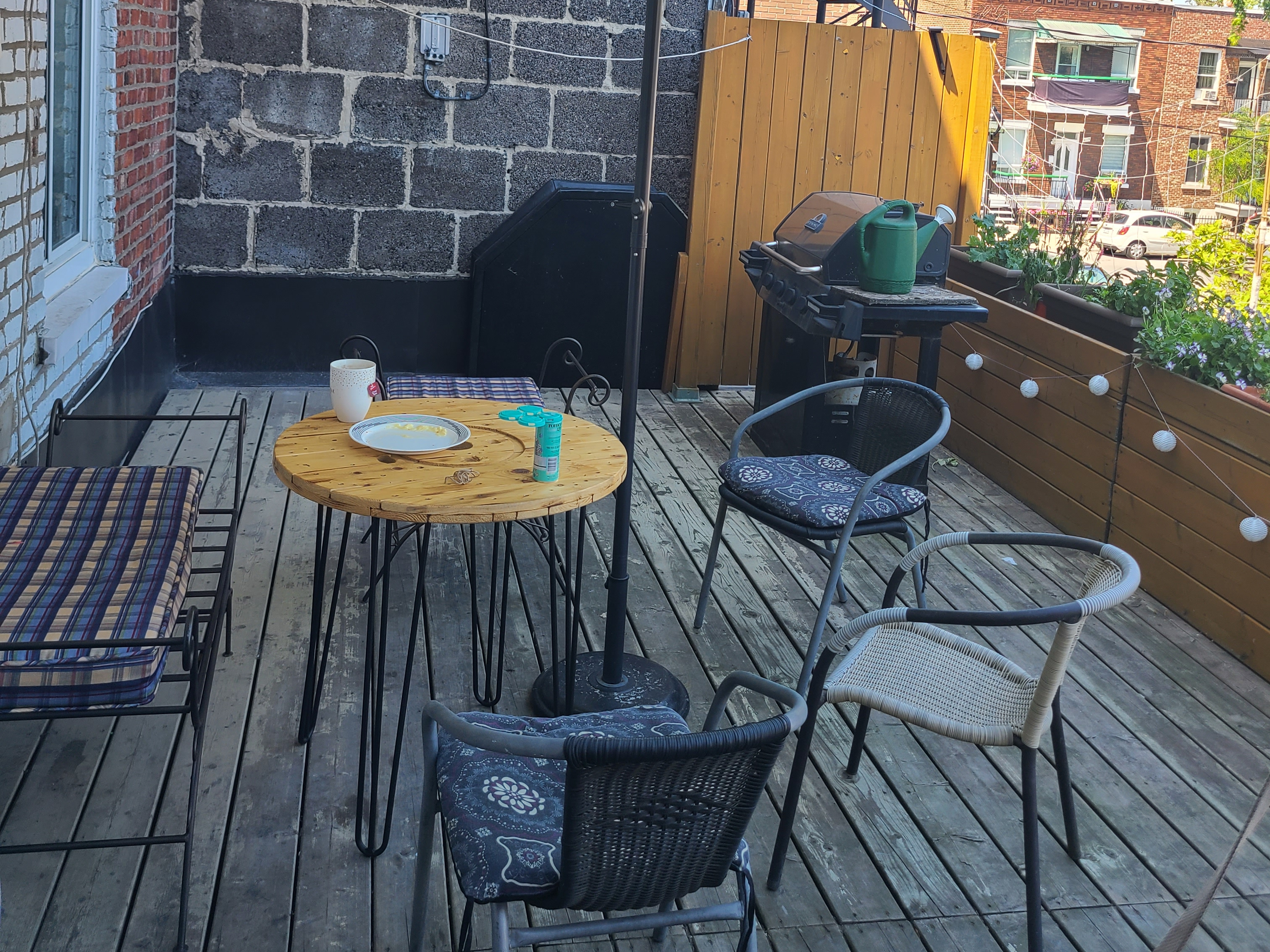
- This area is set back between two buildings, surrounded on 3/4 sides, and faces Northwest.
- Receives very little (if any) sunlight because of this positioning.
- Since the patio furniture stays in the middle section where it is mostly covered from rain, there is space along the wall for shade-loving plants.
 Amanda Gregoire
Leave a comment